Categorías
Nuevo blog
Guía práctica de sistemas modernos de megafonía para proyectos de audio inteligentes
April 28 , 2026
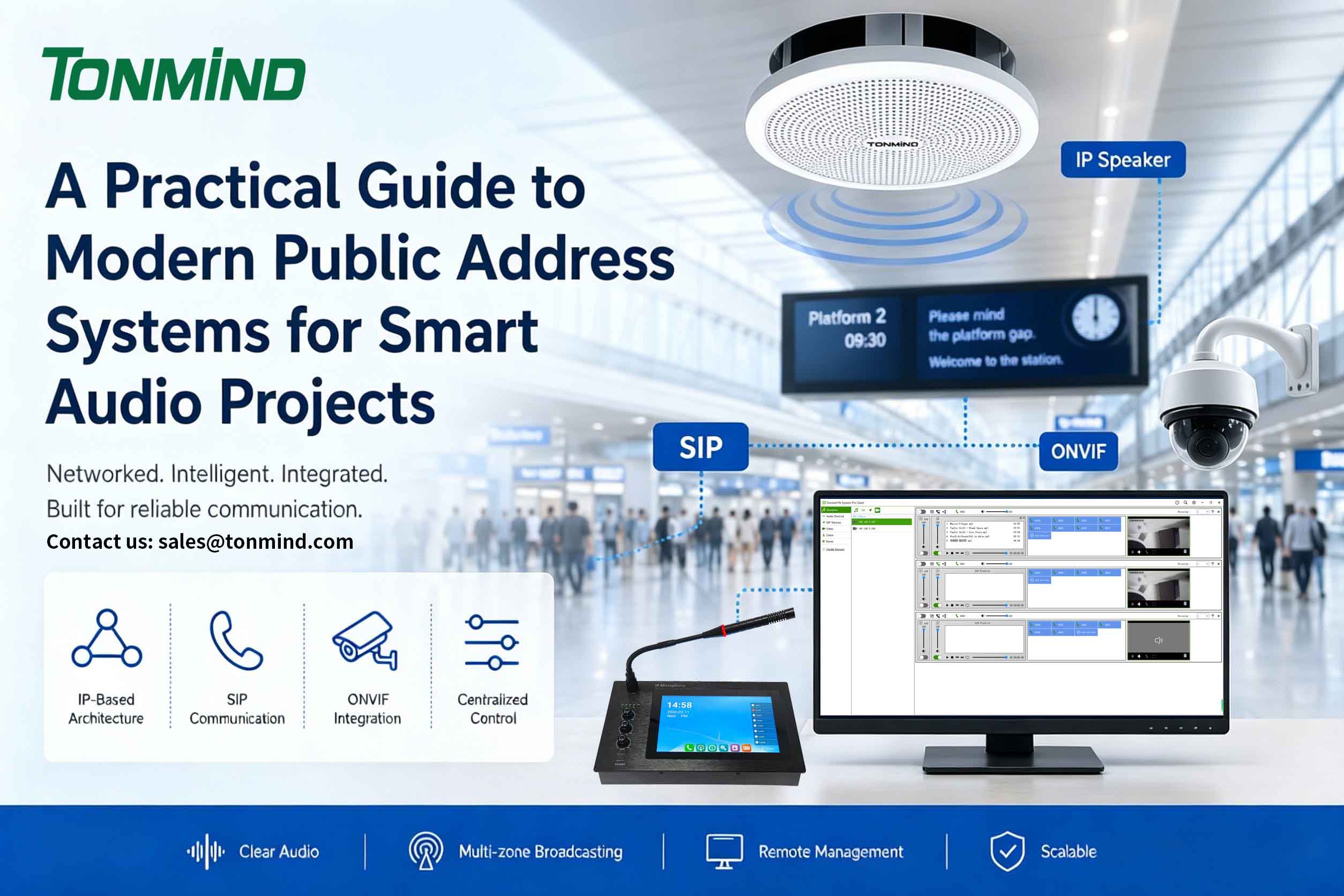
La comunicación clara en entornos grandes o complejos ya no se trata solo de un sonido fuerte, sino de una distribución, control e integración inteligentes. Desde centros de transporte hasta campus universitarios y edificios comerciales, un sistema moderno... Sistema de megafonía Debe ofrecer fiabilidad, flexibilidad y escalabilidad basada en la red.
En esencia, un sistema de megafonía es una solución de distribución de audio diseñada para transmitir anuncios, música ambiental y mensajes de emergencia a áreas específicas. Generalmente incluye fuentes de audio, unidades de procesamiento de señal, infraestructura de transmisión y altavoces.
Sin embargo, los sistemas analógicos tradicionales están siendo rápidamente reemplazados por sistemas basados en IP que permiten el control centralizado, la gestión remota y la integración perfecta con otras plataformas digitales.
Un sistema bien diseñado consta de varias capas esenciales:
● Fuentes de audio Micrófonos, reproductores multimedia y sistemas de mensajes almacenados.
● Procesamiento y amplificación Preamplificadores, procesadores DSP y amplificadores de potencia
● Red de transmisión : Cableado o infraestructura basada en IP para la transmisión de señales
● Puntos finales del altavoz Altavoces de techo, de pared, de columna o de bocina, según el entorno.
En las implementaciones modernas, estos componentes están cada vez más unificados a través de la arquitectura de red, lo que permite operaciones más inteligentes y escalables.
Los sistemas de megafonía convencionales se basan en la transmisión de voltaje constante (70 V/100 V), lo que permite el cableado a larga distancia y el uso de múltiples altavoces, pero ofrece una flexibilidad limitada.
Las soluciones actuales basadas en redes convierten el audio en señales digitales y las transmiten a través de redes IP estándar. Este cambio trae consigo varias ventajas:
● Mayor claridad de audio y menor distorsión.
● Transmisión multizona flexible
● Monitorización y configuración remotas
● Expansión del sistema más sencilla
Un Altavoz IP Se convierte en un dispositivo independiente con decodificación, amplificación y conectividad de red integradas, lo que elimina la necesidad de un cableado centralizado complejo.
Diseñar un sistema eficaz requiere más que seleccionar dispositivos. Se deben considerar varios factores técnicos:
Los niveles de ruido ambiental afectan directamente al rendimiento del sistema. Por ejemplo, las zonas públicas concurridas pueden requerir niveles de presión sonora significativamente más altos para mantener la inteligibilidad.
La distribución uniforme es fundamental. En la mayoría de las aplicaciones en interiores, los altavoces se colocan a varios metros de distancia para garantizar una cobertura uniforme y evitar zonas sin cobertura.
La capacidad del amplificador debe superar los requisitos de carga calculados para tener en cuenta las pérdidas de línea y la futura expansión.
Una correcta conexión a tierra, un blindaje adecuado de los cables y una protección contra sobretensiones son esenciales para mantener un funcionamiento estable y evitar fallos en el sistema.
Un moderno Sistema de megafonía Admite una amplia gama de casos de uso:
● Transporte Anuncios en tiempo real y orientación para la evacuación de emergencia.
● Educación : Transmisiones programadas, comunicación en todo el campus
● Espacios comerciales Música de fondo, promociones y notificaciones públicas.
● Instalaciones industriales Alertas de seguridad y coordinación operativa
Estos entornos exigen no solo una reproducción de sonido óptima, sino también un control inteligente y la integración de sistemas.
A medida que los sistemas se interconectan más, la compatibilidad con los estándares de comunicación y seguridad cobra cada vez más importancia.
● SIP (Protocolo de inicio de sesión) Permite una integración perfecta con los sistemas VoIP, posibilitando funciones de megafonía, intercomunicación y difusión a través de las redes de comunicación existentes.
● ONVIF La compatibilidad permite que los dispositivos de audio interactúen con los sistemas de videovigilancia, posibilitando respuestas audiovisuales sincronizadas en escenarios de seguridad.
Al combinar estas tecnologías, un sistema de megafonía evoluciona hasta convertirse en una plataforma de comunicación unificada en lugar de una solución de audio independiente.
TONMIND se centra en ofrecer sistemas de audio basados en IP diseñados para la escalabilidad y la interoperabilidad. Aprovechando tecnologías como Arquitectura de altavoces IP, protocolos de comunicación SIP e integración ONVIF Las soluciones de TONMIND permiten:
● Gestión centralizada y remota del sistema
● Zonificación y programación flexibles
● Monitorización y diagnóstico en tiempo real
● Integración perfecta con los sistemas de seguridad y comunicación.
Este enfoque reduce la complejidad de la instalación al tiempo que mejora el rendimiento y la adaptabilidad del sistema.
La tecnología de megafonía ha evolucionado mucho más allá de la simple amplificación. Gracias a la adopción de redes IP y protocolos abiertos, los sistemas modernos son ahora inteligentes, están conectados y son altamente adaptables.
Para los integradores y planificadores de proyectos, elegir la arquitectura adecuada, especialmente una que admita Implementación de altavoces IP, interoperabilidad SIP e integración ONVIF es clave para construir un futuro preparado Sistema de megafonía que cumpla con los requisitos operativos y de seguridad.
Etiquetas :